Skip to content
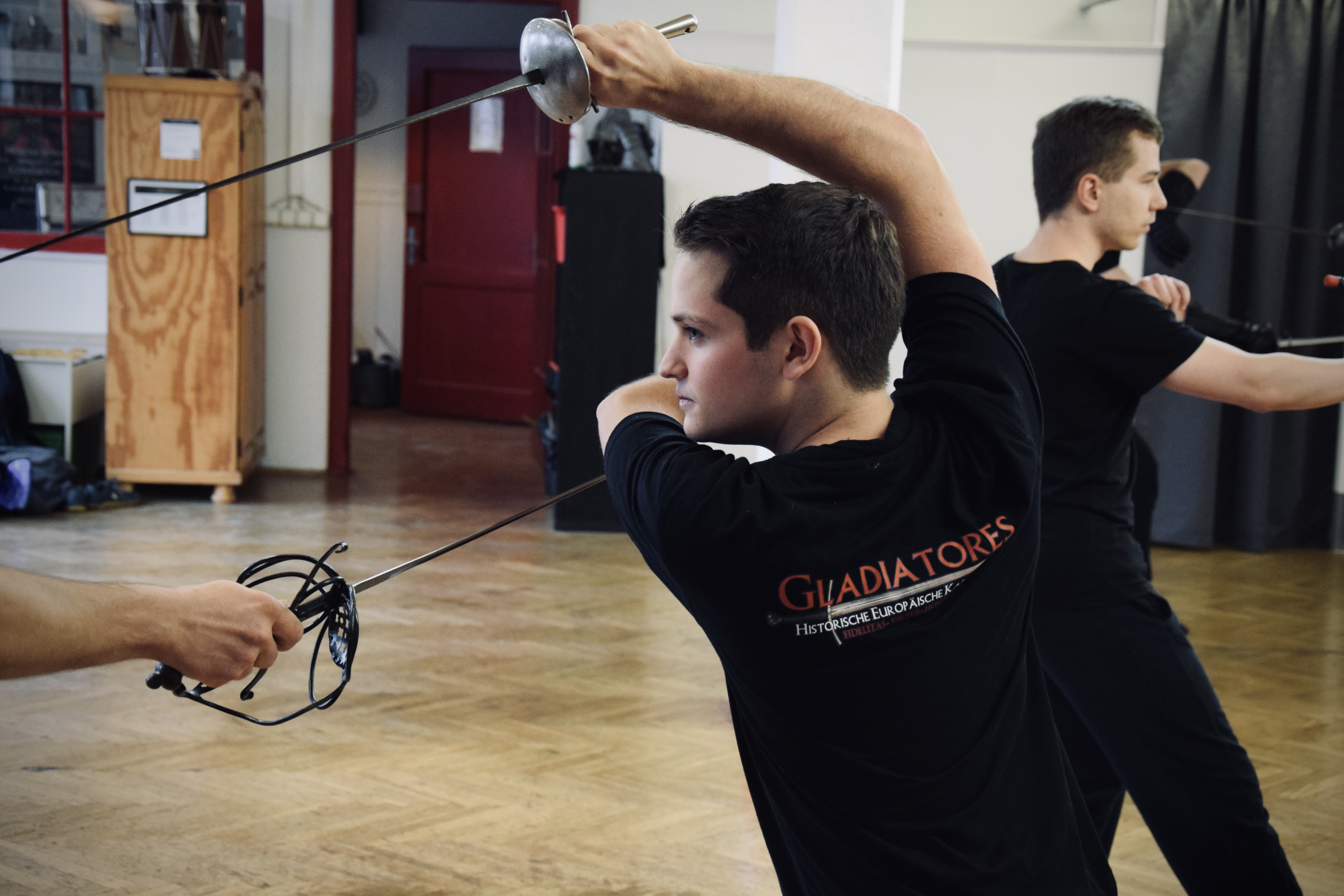
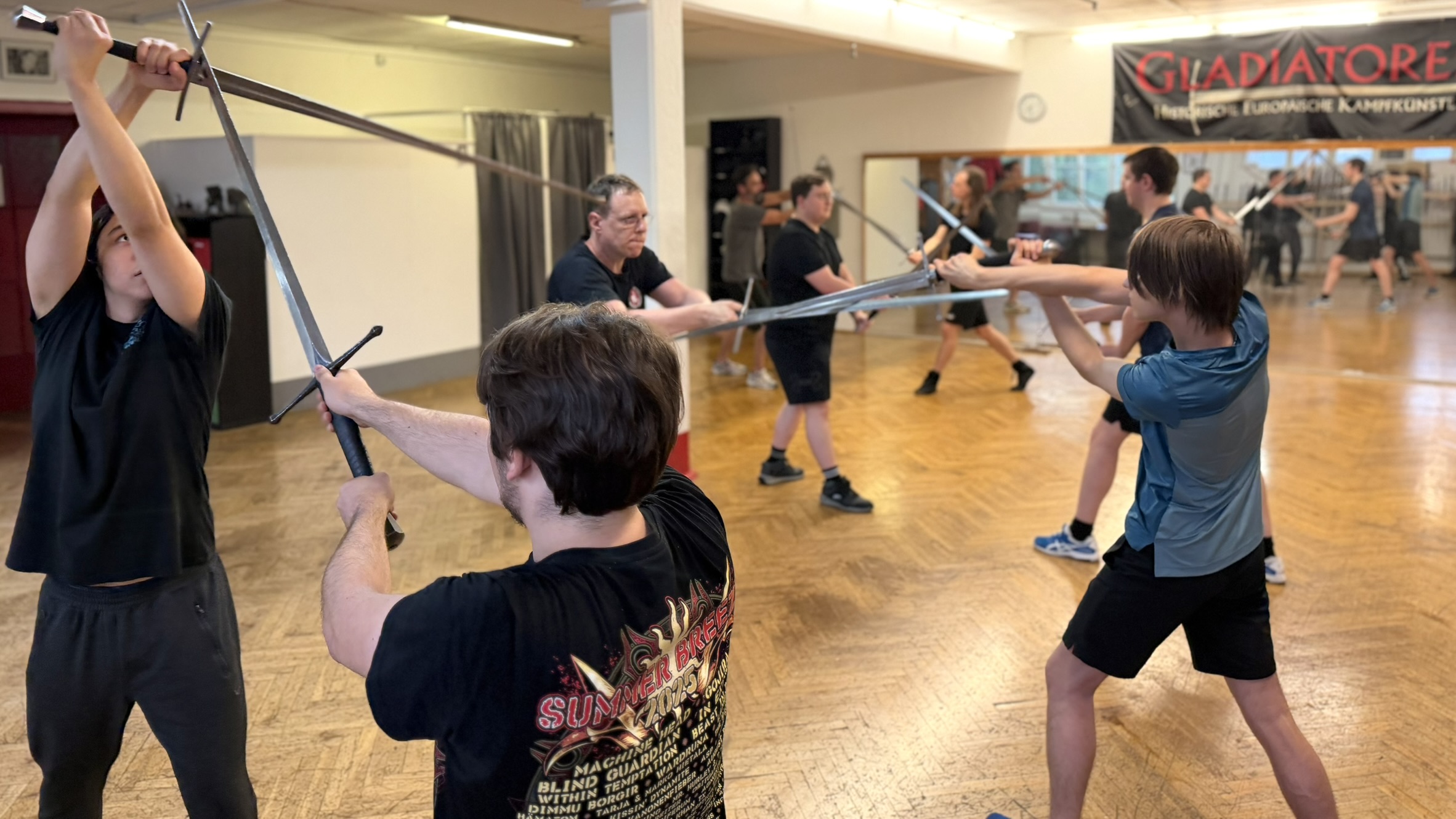
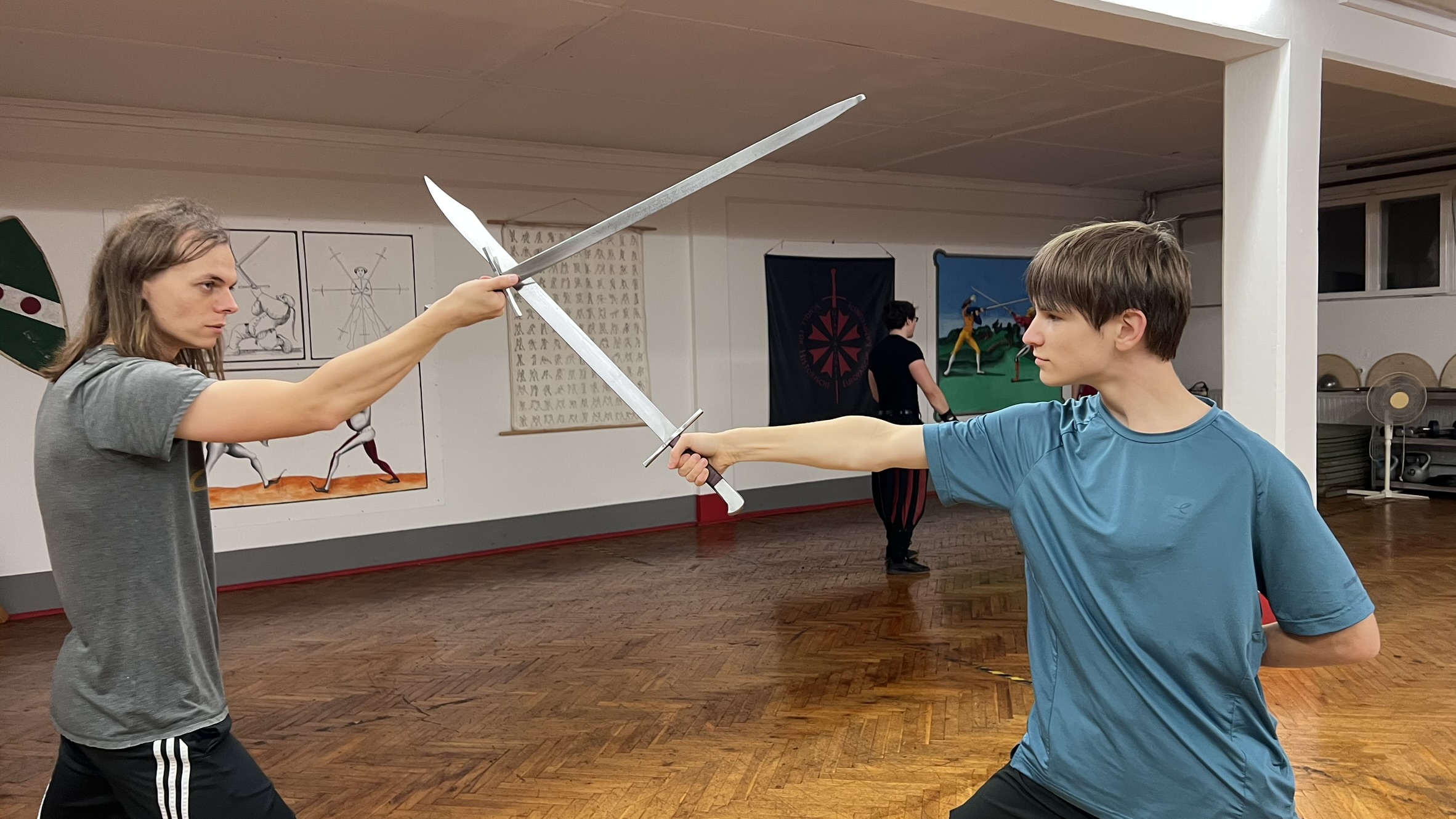
Two fencers in the bind in the training hall

Historical European Martial Arts

Historical swordsmanship, from the sources.

HEMA is the reconstruction of Europe's medieval and Renaissance martial arts — built from the fencing manuals their masters left behind. No roleplay, no choreography. A martial art with a written record.

Fundamentals

What HEMA is.

HEMA stands for Historical European Martial Arts — the fencing and grappling arts taught across Europe between the 14th and 17th centuries, and recorded in fencing manuals.

These arts vanished from everyday instruction over the centuries. What survived are the manuscripts and prints — teaching texts with illustrations, some in verse, some as commentary. HEMA works from them the way a musician works from a score: read, interpret, test, correct.

So we don't train techniques someone made up. Every movement can be traced back to a passage in a source — and where the interpretation is disputed, we say so.

Longsword

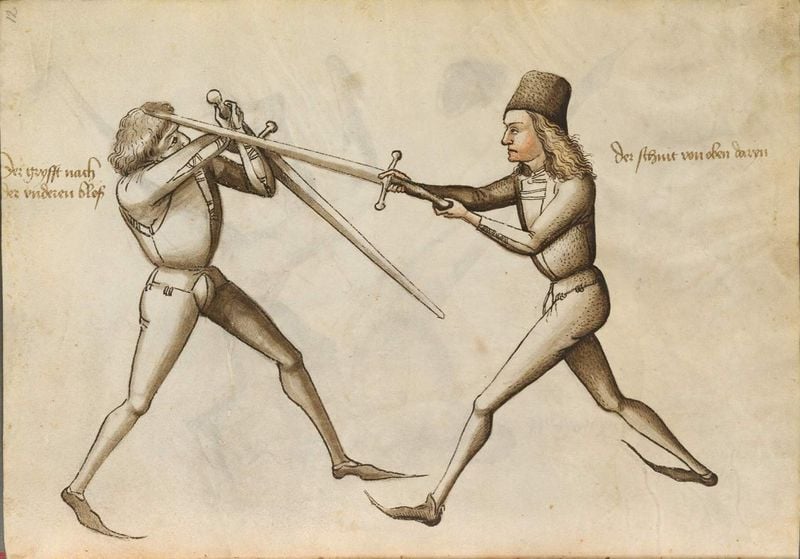
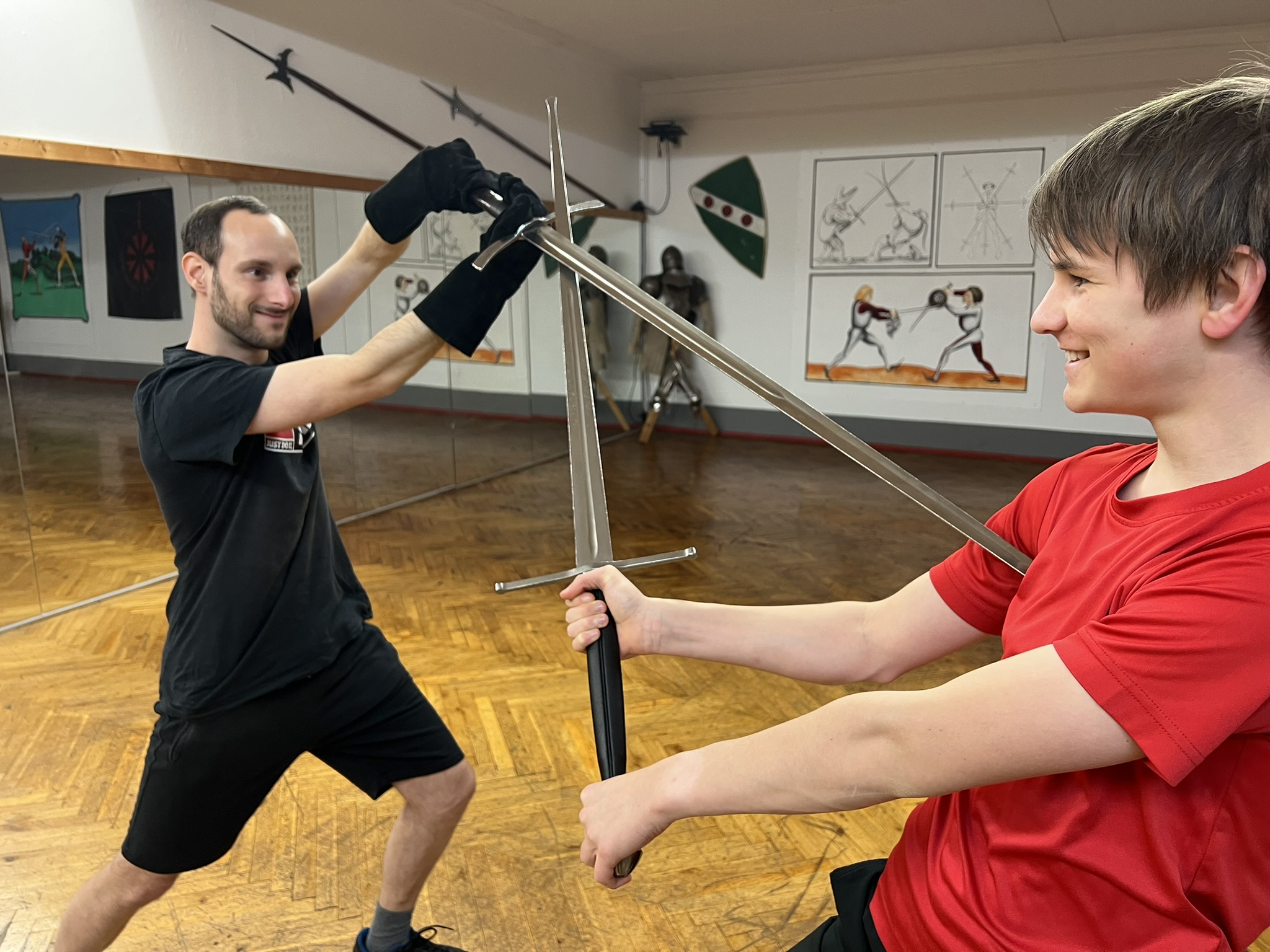
The longsword is the flagship weapon of the German fencing tradition, and the best-documented discipline of all. Held in both hands, roughly 1.2 metres long, lighter than its reputation suggests. It isn't fought with strength against strength, but through angle, timing, and the feel in the blade: standing in the bind, you sense whether your opponent is pushing hard or soft, and choose your technique accordingly.

Distance
medium to close
Grip
two-handed
Core
bindwork, winding, master strikes

The tradition traces back to Johannes Liechtenauer, whose mnemonic verses were commented on by numerous fencing masters from the late 14th century onward.
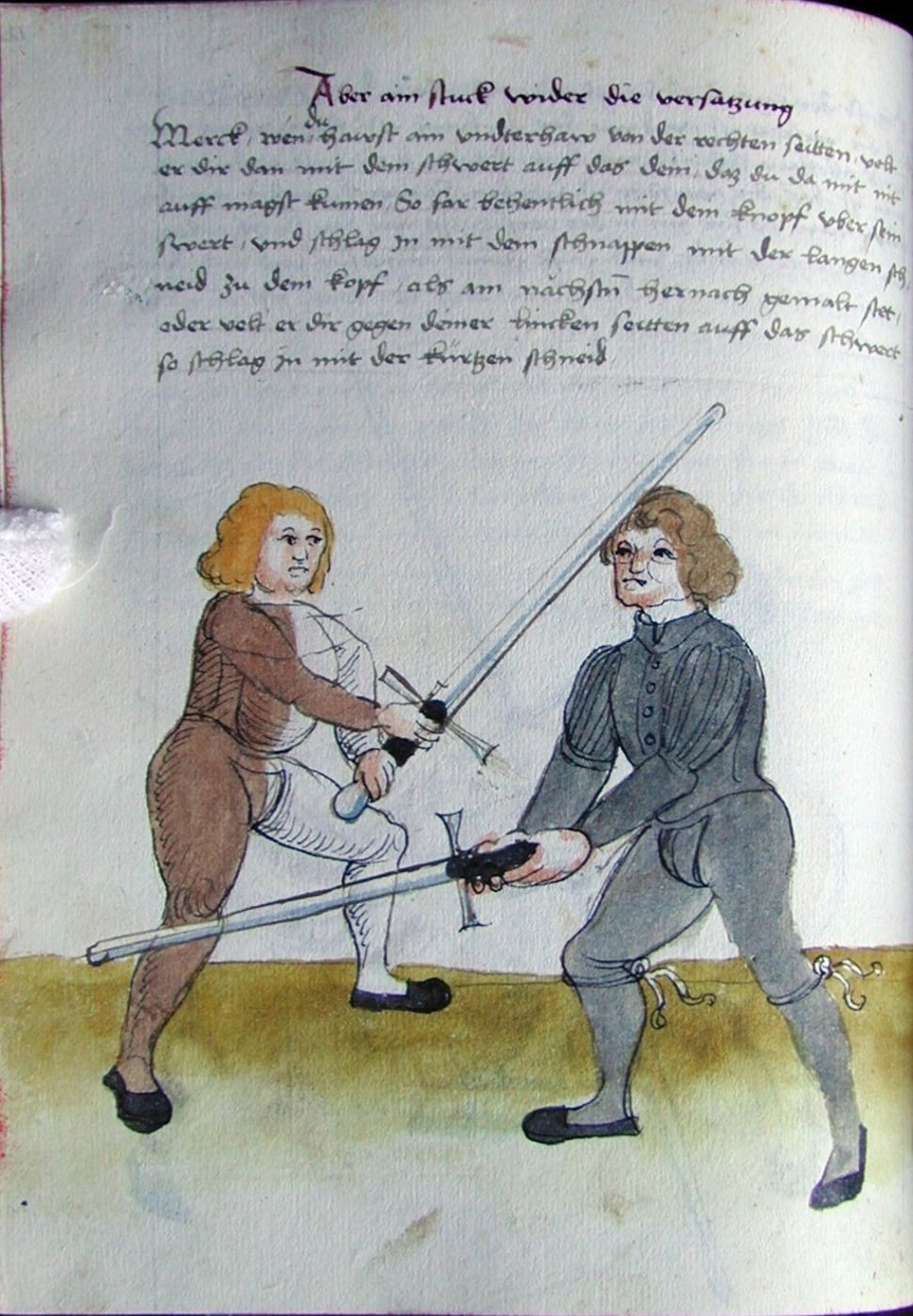
Longsword in the bind

Cod.icon. 394a, fol. 12r · Bavarian State Library, Munich
Langes Messer

Langes Messer

A single-edged short sword, held in one hand, with a parrying peg over the hand. The messer was the citizen's weapon — permitted, everyday, often the only blade someone carried. Its fencing is correspondingly direct: shorter lines, more body involvement, frequent transitions into wrestling at the sword.

Distance
close
Grip
one-handed
Core
cuts, parries, transition into wrestling

The main source is the fencing manual of Johannes Lecküchner (15th century), which treats messer fencing more thoroughly than any other work.

Rapier

With the rapier, the logic changes. The weapon is long, slender, and built for the thrust; it's fought at distance, on a straight line, with the feet setting the tempo. Where the longsword negotiates in the bind, here it's measure that decides: go forward a hand's width too early, and you're hit.

Distance
far
Grip
one-handed
Core
measure, line, the thrust

The Italian school of the 17th century — Ridolfo Capoferro and Salvator Fabris — provides the foundations.

Rapier
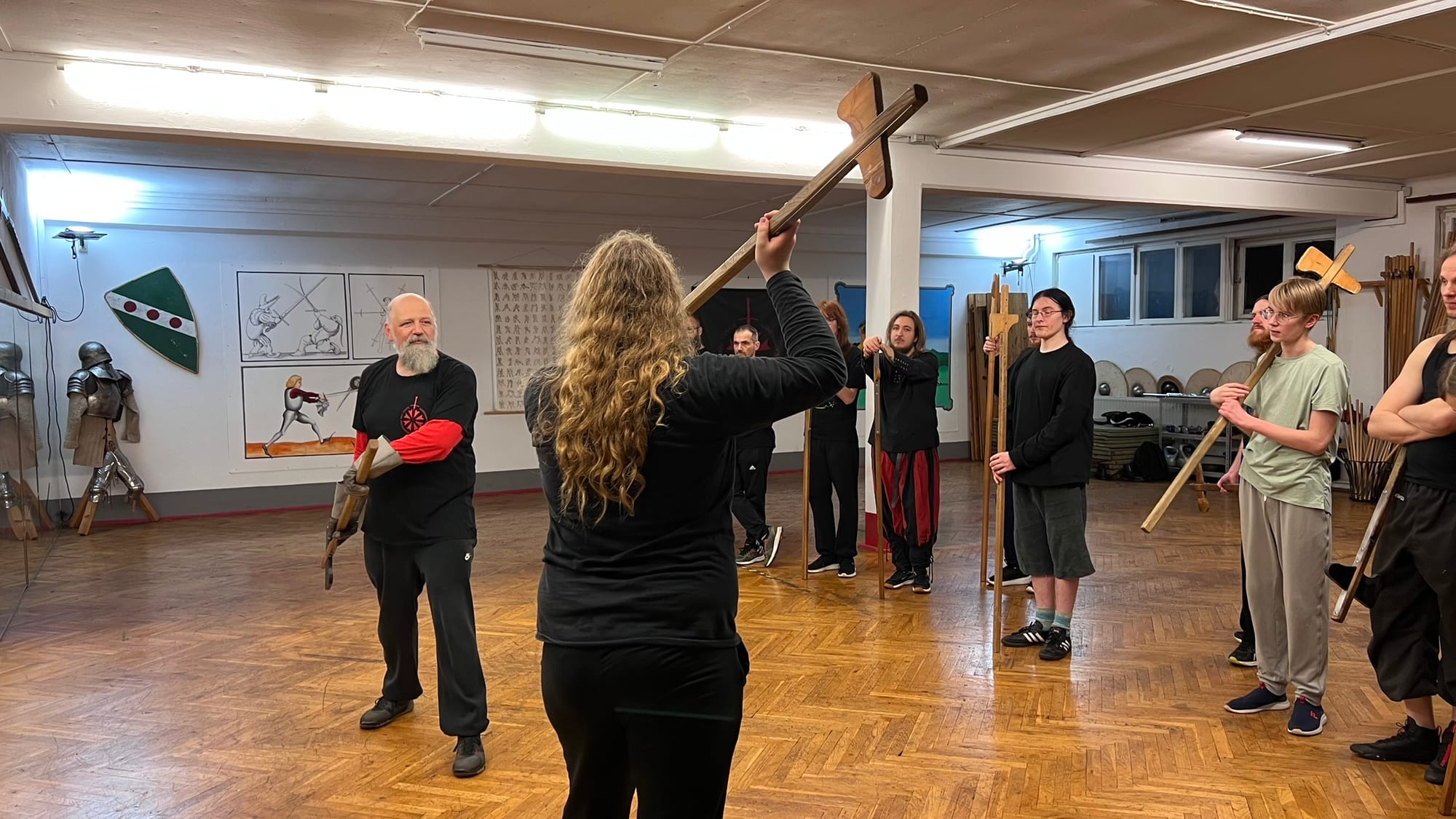
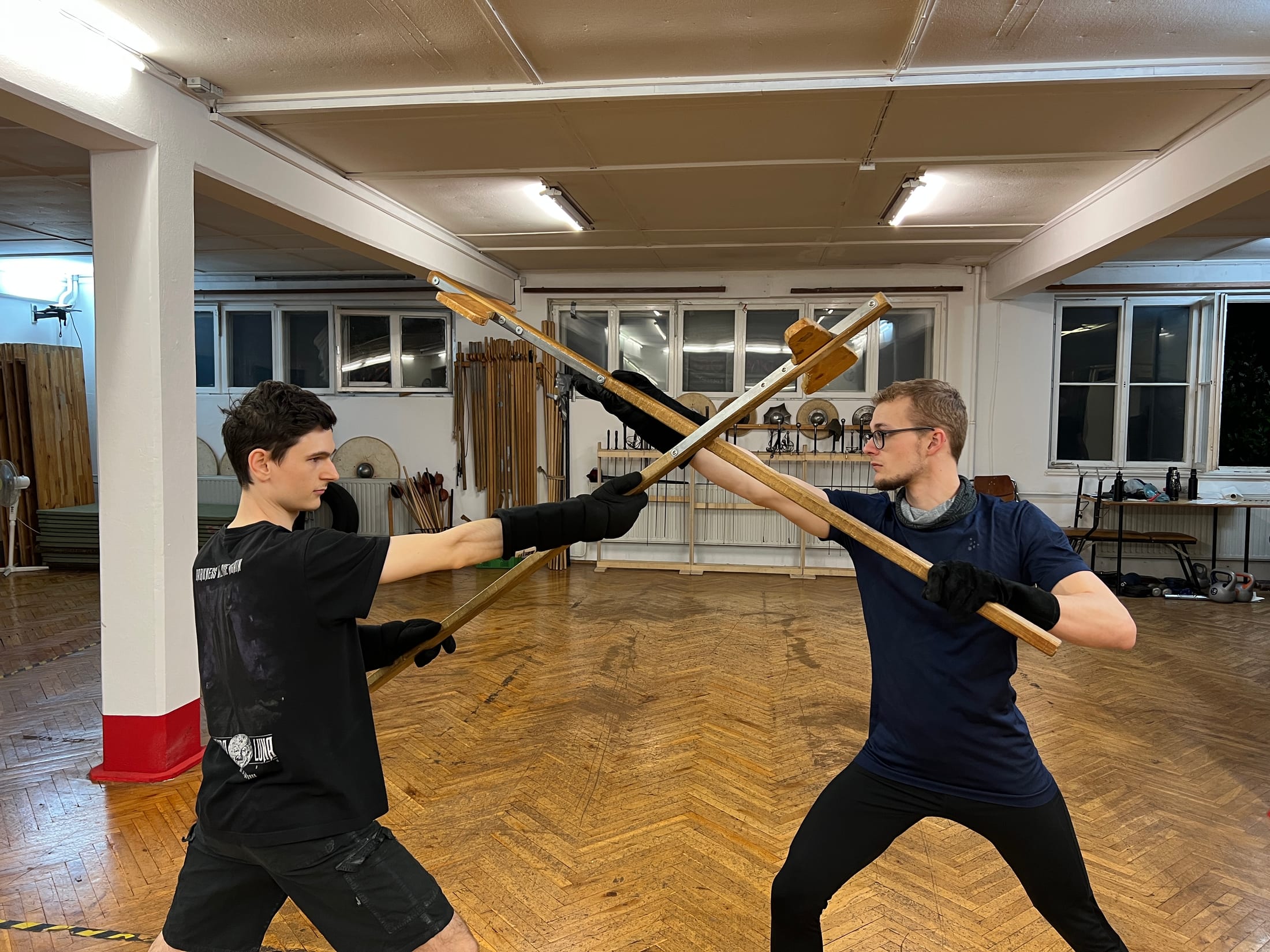
Training with the Mordaxt

Mordaxt

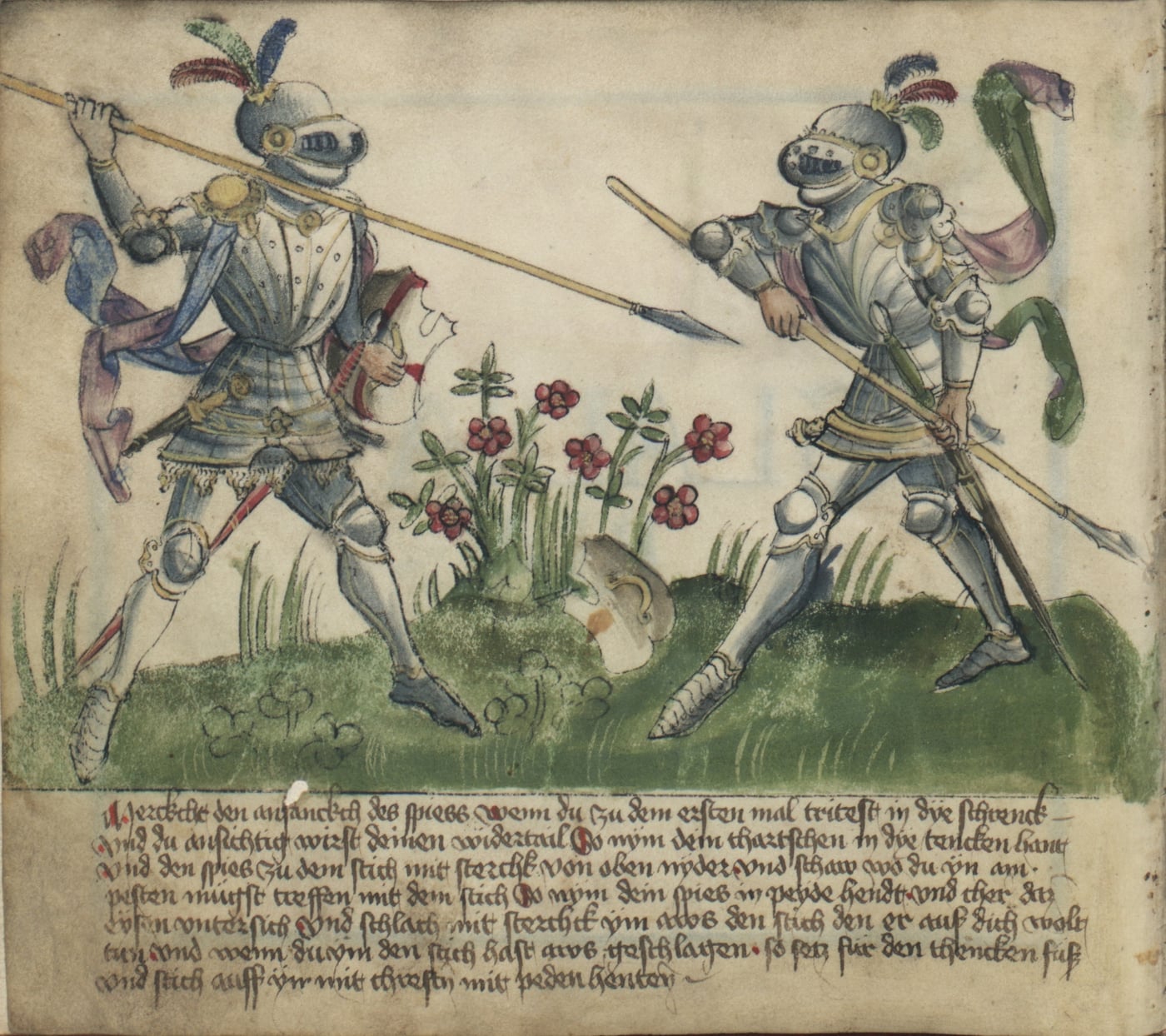
The Mordaxt is a polearm for armoured combat: roughly two metres long, with a hammer, hook, and spike. It's gripped at both ends and constantly switches sides — striking, hooking, levering, thrusting. Fighting with it feels less like blade work and more like leverage mechanics with a long tool.

Distance
far to close
Grip
two-handed, switching
Core
hooks, leverage, armoured combat

Le Jeu de la Hache, a 15th-century Burgundian manuscript, is the richest source on axe combat.

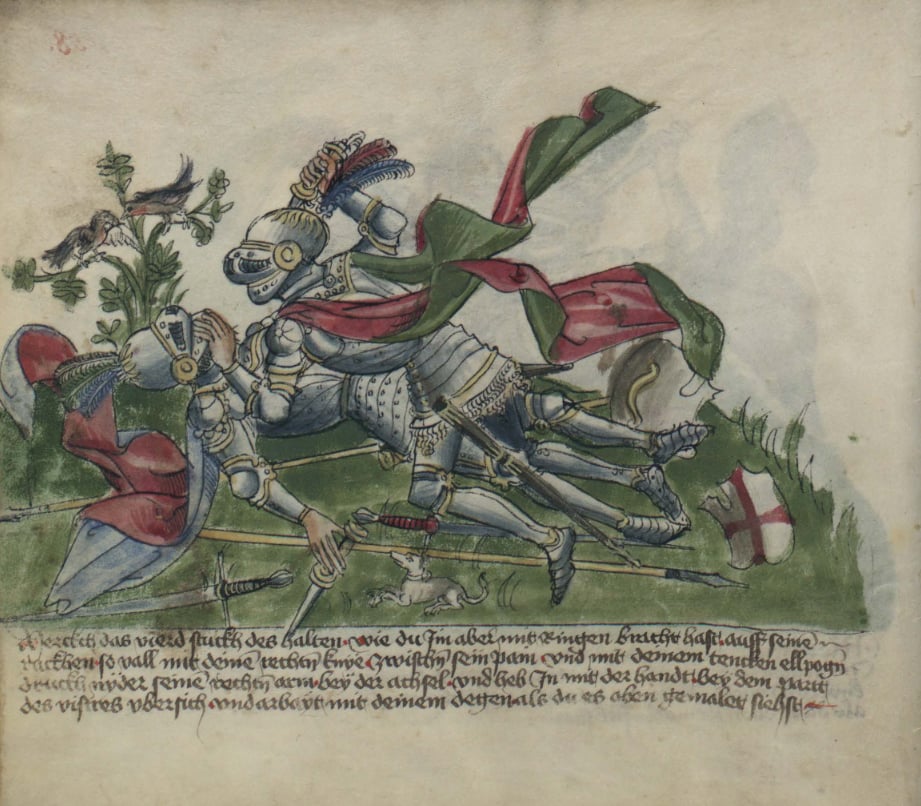
Gladiatoria, MS Germ. Quart. 16, fol. 1v · armoured combat with the spear

Dagger

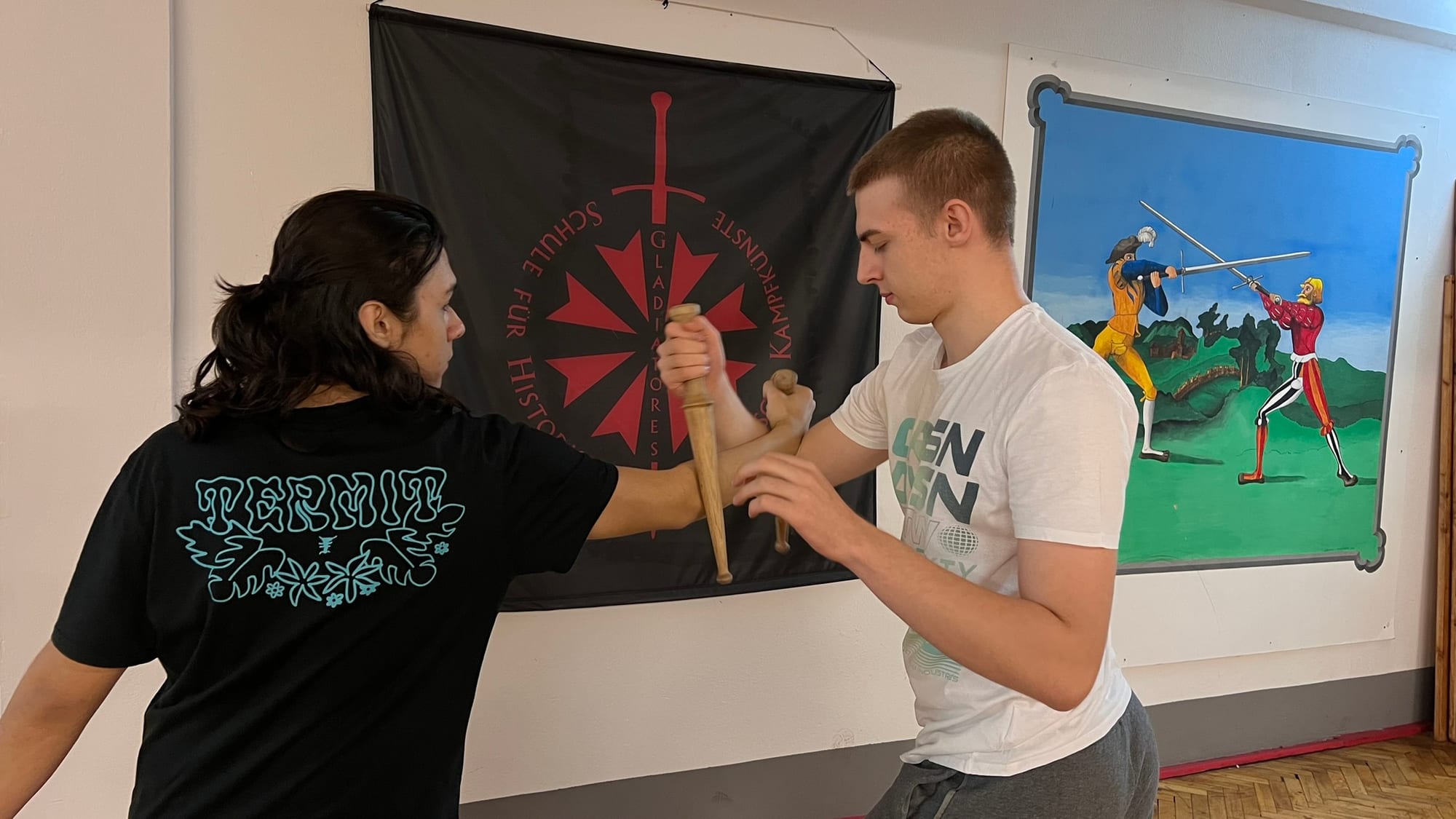
At the shortest distance, the dagger is the hardest discipline in the collection. No measure, no bind — it comes down to grip, angle, and split seconds. We train attack, defence, disarms, and the transitions to where a blade alone no longer decides.

Distance
shortest
Grip
one-handed
Core
defence, disarms, control

The Gladiatoria group (15th century) shows the dagger in the context of armoured combat.

Dagger work in training
Wrestling in training

Wrestling

In the sources, wrestling (Ringen) isn't a discipline of its own — it's the foundation all the others stand on. The moment distance collapses, it decides: a grip on the arm, a lever at the elbow, a throw over the hip. Anyone who wrestles understands fencing better afterward — because any bind can, eventually, turn into body contact.

Distance
body contact
Grip
unarmed
Core
levers, throws, breaking distance

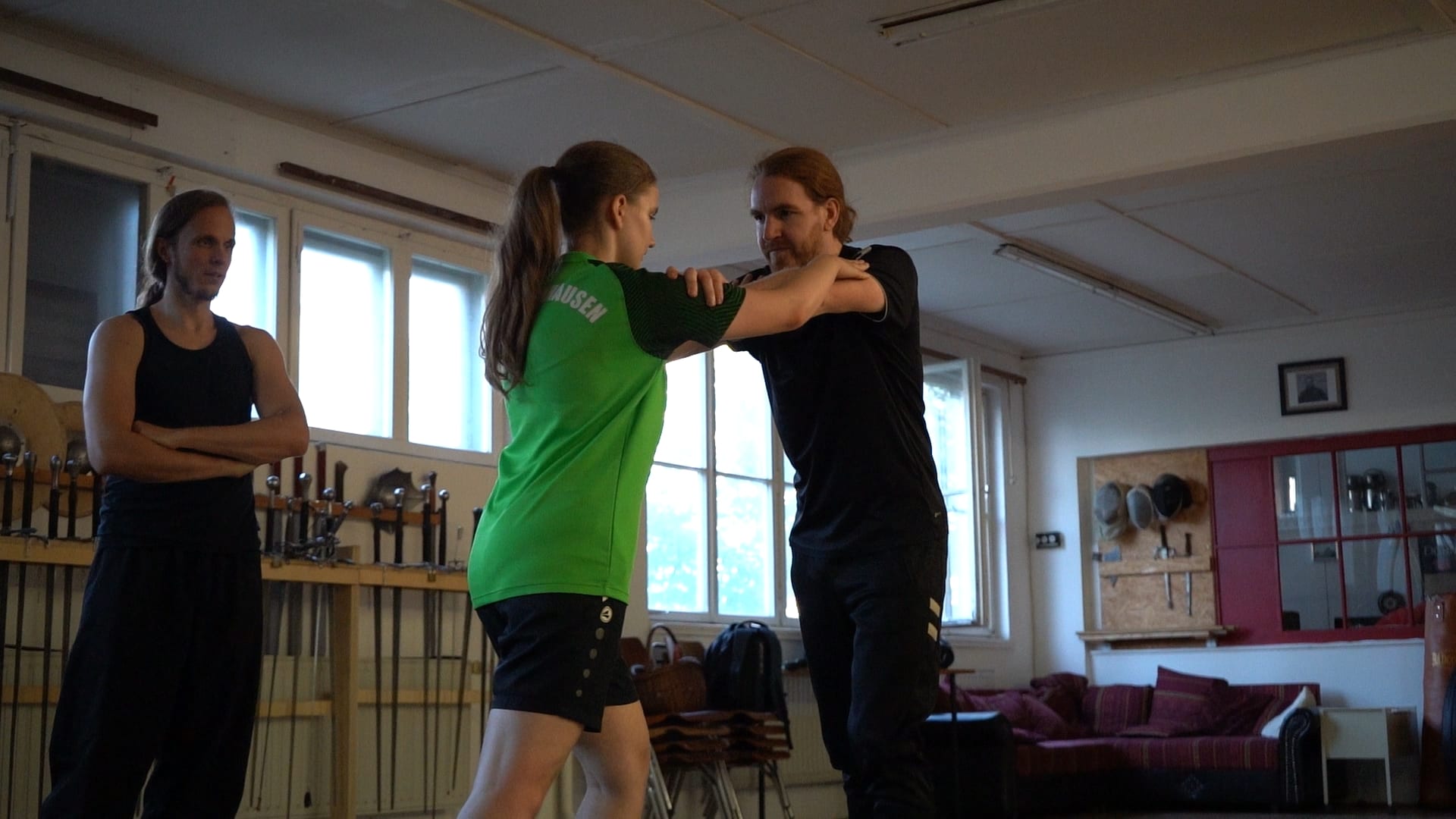
In a sword fight, the distance can quickly become too close for the blade alone to work. That's when you grab, wrestle, and throw.

Armoured wrestling · fencing manual, 15th century

Origin

Reconstructed, not invented.

What we teach is written down. Between the 14th and 17th centuries, Europe produced hundreds of fencing manuals — manuscripts and prints in which masters recorded their systems: mnemonic verses, commentary, illustrated plates, sometimes entire curricula.

Working with the sources is an ongoing process. A passage gets translated, its meaning worked out, and turned into movement. We compare different sources, study images and descriptions, and test the resulting interpretation with a partner in training. Step by step, that builds an understanding of how a technique might have worked — and what the old fencing masters passed down about their art.

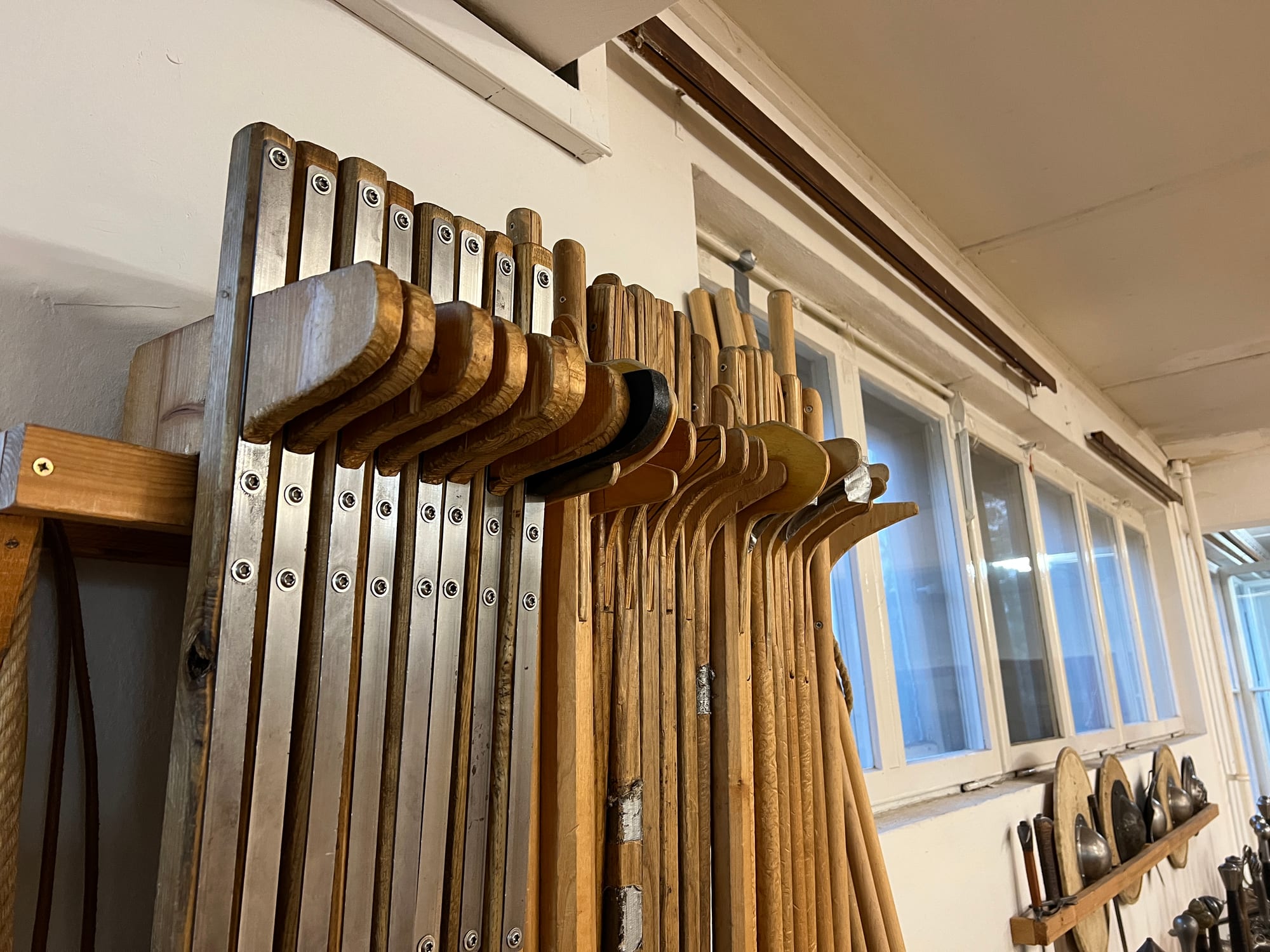
Weapon rack with practice weapons
Page from a 15th-century fencing manual
MS E.1939.65.341, fol. 11v · Glasgow Museums

Distinction

How HEMA differs.

HEMA is sometimes confused with other forms of swordsmanship. The difference lies less in the weapons than in what we're trying to achieve with them.

HEMA

Historical fencing is reconstructed from surviving sources. Texts and images set the direction; the techniques are tested in practice and have to hold up against a partner who isn't cooperating.

LARP

Here, shared play is the point. Combat is part of a story, and roles and rules build a fictional world. HEMA, by contrast, is about understanding a historical martial art and testing it in practice.

Many people come to us from LARP — the enthusiasm for swordsmanship connects both.

HEMA

We work with the complete historical combat systems — different weapons as well as wrestling, levers, and throws. Which techniques and principles belong follows from the surviving sources.

Sport & Olympic fencing

Foil, épée, and sabre are modern competitive sports with their own techniques and a fixed rule set. HEMA doesn't follow a modern sporting standard — it takes its direction from the historical fencing sources and the combat systems they describe.

HEMA

Even in armour, the goal is to reconstruct historical combat techniques. The armour is part of the historical context — not the actual point of the contest.

Buhurt

Buhurt is a modern full-contact competition in armour. What matters is physically prevailing under today's rules. HEMA asks a different question: how did the historical fencing masters describe combat with and in armour?

None of these disciplines is worth less than the others. They just pursue different goals.

Getting started

Frequently asked questions.

Is it dangerous?

We train with blunt-tipped feders, wood and synthetic weapons, and protective gear matched to each exercise. Injuries are rare and mostly bruises. Still, this is a martial art — a small risk of injury can't be fully ruled out.

Do I need prior experience?

No. Most people start from zero. Experience from other martial arts sometimes helps, sometimes doesn't — the longsword runs on its own rules.

Do I need to be fit?

You don't need a base level of fitness going in — it develops. If you're tired after two hours of training, you did everything right. If you have health limitations, let us know beforehand — a lot can be adapted.

Can I train as a woman?

Yes, and that's not an exception. Technique, timing, and distance decide more than raw strength. Everyone trains together with us — no separate groups.

Is this a competitive sport?

Not primarily. Martial art before combat sport: there are tournaments in the HEMA scene, and anyone who wants to can enter. Training focuses on the source, not the scoring.

Training group in the hall

Swordsmanship in Karlsruhe

Historical fencing. Trained today.

During the week, we train with a range of historical weapons — from the longsword to the rapier. You don't have to commit in advance: just come to a trial session and discover what suits you.

Training Mon–Fri from 6pm